THE ROBOT COMES OUT. THE GATE GOES IN.
An E-Gear or F1 car and a gated car share the same six-speed gearbox. One has a hydraulic actuator bolted to it. The other has three pedals and an open gate, and sells for roughly double.
We take the first car and make it the second one. Genuine OEM hardware sourced from Italy, fitted in Orlando, documented so the work is provable when the car trades.
Tell us the car and the VIN. You get the parts list, the real cost and the timeline before you commit to anything.
THE THIRD PEDAL IS THE OPTION THAT PAYS
Not Our Opinion. The Public Auction Record.
Every other factory option on these cars depreciates. The gearbox is the one that goes the other way, and the gap is not subtle.
| Ferrari F430 Spider | Market |
|---|---|
| F1 automated, as most were built | $90,000 – $120,000 |
| Converted to gated manual12,000-mile car, sold publicly on Bring a Trailer | $202,500 |
| Factory-built manual | $350,000 – $400,000 |
“But a converted car isn't a factory manual.”
Correct, and we will never tell you otherwise. A conversion does not turn your car into one of the handful that left Maranello with three pedals, and the market prices it accordingly.
Look at what it does do. That F430 Spider started life as an F1 car in the $90,000 to $120,000 band. It sold on a public auction site, in front of every skeptic in the hobby, for $202,500. It did not need to reach factory-manual money to roughly double.
Lamborghini Gallardo
The volume case, and the one we are asked about most. Gallardo production ran into five figures; genuine three-pedal cars number in the low hundreds. Yet the E-Gear unit is the same six-speed gearbox with a hydraulic robot bolted to it, and that robot is the car's best-known failure point. Owners budget for E-Gear pumps, accumulators and position sensors the way other people budget for tires. The conversion removes the actuator, fits the factory gate, pedal box and hydraulics, and turns the most expensive thing about owning the car into the strongest line in its listing.
Ferrari 612 Scaglietti
The sleeper of the V12 era. Its 5.75-liter F133 V12 traces its lineage to the 550 and 575M Maranello, and among specialists that engine carries a legendary reputation. Then look at how few came with a stick.
Manual 612s average roughly $243,000 with a recorded high of $467,000, and the published guidance puts a manual car about $200,000 above an otherwise identical F1 example. Sixty cars in this country. A gated conversion puts the shifter this grand tourer always deserved behind that V12.
We also quote conversions for the Murciélago, 360, F430, 599 and Maserati Cambiocorsa cars including the GranSport. Full model details are on our manual swap service page.
Market figures compiled from published auction results and market data, including Bring a Trailer sale records, Classic.com market averages and Hagerty market reporting. Values move. Yours will be assessed against current comparables, not against this page.
THREE STAGES, NOT ONE INVOICE
Nobody should be asked to approve a conversion before they know what the hardware costs. So we split it. You decide again at every stage, and you can stop after any of them.
ASSESSMENT & PARTS SEARCH
The first commitment
We confirm exactly what your chassis needs, then work our Italian channels to find out what the hardware actually costs and how long it takes to land. You get a written parts list with real prices and a real timeline, specific to your VIN. If we cannot source the hardware, you owe nothing beyond the assessment and you keep the report.
HARDWARE SECURED
Only if you like the numbers
When a gate assembly surfaces it goes to whoever is ready to move, so this stage is about being ready. You approve the parts list from stage one and we buy against it. Every piece is genuine OEM, and every piece is documented as it arrives.
CONVERSION & DOCUMENTATION
Scheduled around you
The automated actuation comes out. Clutch hydraulics, pedal box and gate go in. The ECU is coded for true manual operation with factory features retained. Then road testing, adjustment, and a documented record of the conversion for value verification when the car trades. Typically 2 to 4 weeks once parts are in hand.
The part nobody tells you: you are not buying a new gearbox. Ferrari F1 and Lamborghini E-Gear are automated versions of the same six-speed fitted to the factory manual cars. The conversion removes the automated actuation and fits the gate, pedal box and clutch hydraulics. Your gearbox stays in the car.
WHAT YOU GET
GENUINE OEM, NEVER AFTERMARKET
Gate, pedals, linkage and hydraulics sourced from Italy. Aftermarket hardware is what makes a conversion worth less than the car it went into
YOUR GEARBOX STAYS
F1 and E-Gear are automated versions of the same six-speed. The robot comes out, the gearbox never leaves the car
PRICED BEFORE YOU COMMIT
Stage one gives you the real parts cost and timeline in writing. Nobody signs a conversion without knowing the number first
2 TO 4 WEEKS IN THE SHOP
Sourcing sets the calendar, not the wrenching. Once the hardware lands, the car is not gone for a season
FINDING THE HARDWARE IS THE HARD PART
It Is Also Why This Is Worth Doing Properly
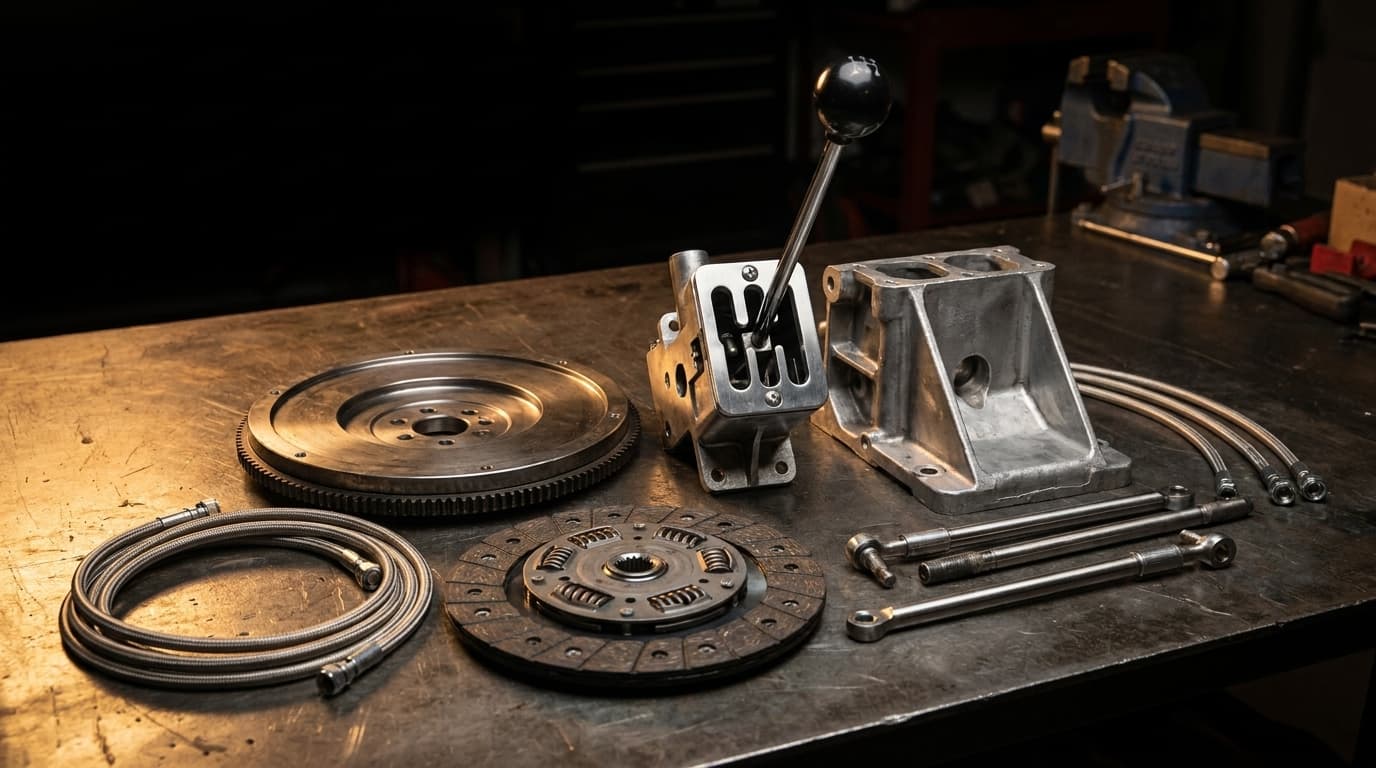
These cars were built in small numbers, the manual versions were the rarest of them, and the factory stopped making the parts years ago. Genuine gate assemblies, pedal boxes and linkages surface through our connections in Italy: OEM channels, dismantlers, and factory take-off stock.
Scarcity sets the price, and when a gate assembly surfaces it goes to whoever is ready to move. That is the whole reason stage one exists: so you already know your number and can say yes on the day a part appears, instead of starting the conversation then.
The open gate, lever and base plate. The single hardest piece to find, and the one everyone recognizes
Factory three-pedal assembly with the correct mounting points and pedal geometry
The hydraulic circuit the automated cars never had
Manual-spec rotating assembly matched to your engine
OEM linkage that gives the gate its mechanical snick
The interior pieces that make the conversion look factory, because it is
THE WORK ITSELF
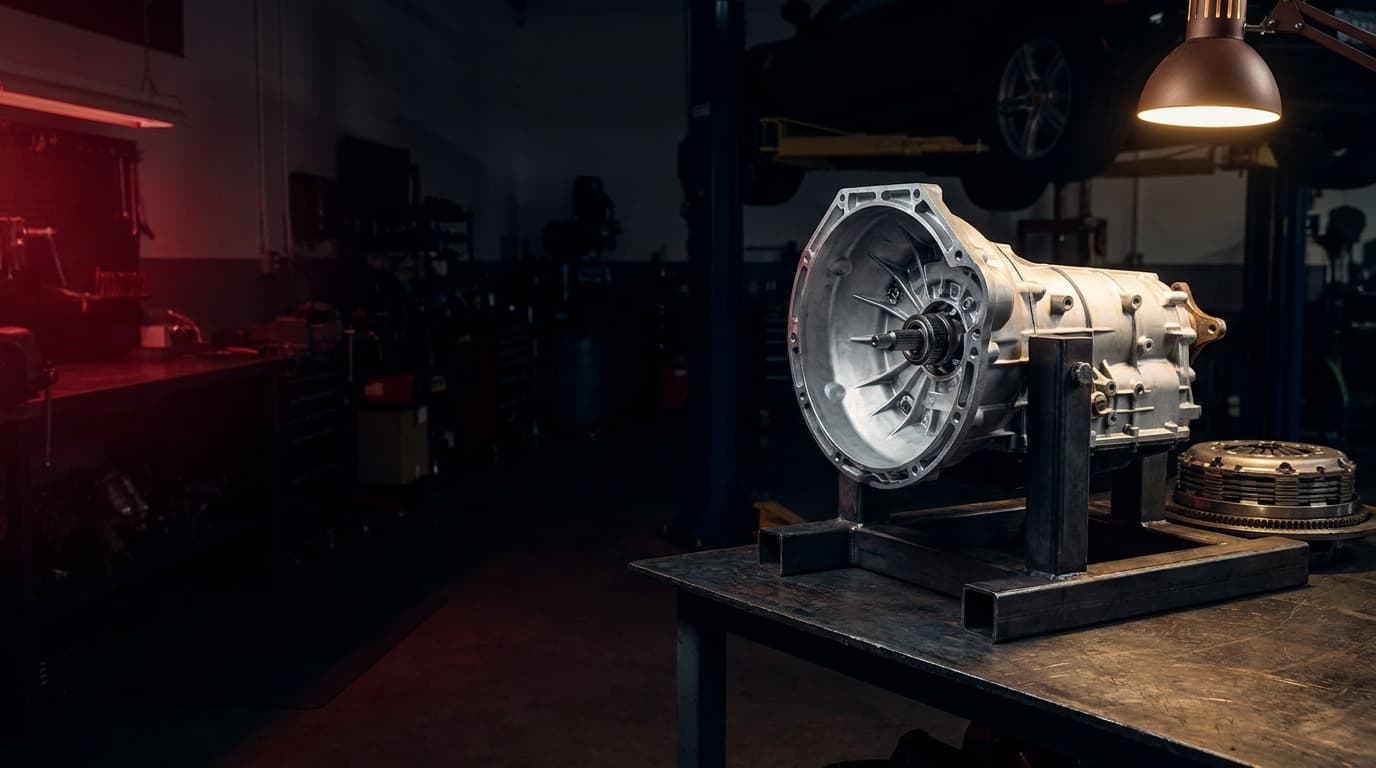
The automated actuation and its hydraulics come out. The clutch pedal box mounts to the factory points. The clutch master cylinder and lines go in, creating the hydraulic circuit an automated car never had. The flywheel and manual-spec clutch assembly are fitted to your existing gearbox.
The gate seats into the console with manual-spec trim, so it looks like it left the factory that way. The ECU is then coded for true manual operation with all factory features retained.
Road testing and adjustment follow, then the conversion is documented in full, so when the car trades the work is provable rather than claimed.
PROCESS FAQ
What does it cost?
It depends almost entirely on what the hardware costs the week we find it, which is why stage one exists. The assessment gives you a written parts list with real prices for your specific car before you commit to the conversion. Anyone quoting a flat price for every chassis is guessing at the expensive half.
Do I have to do the whole thing at once?
No. The three stages are separate decisions. Plenty of owners do the assessment, sit with the numbers, and come back when a part surfaces or when the timing suits them. The parts report is yours either way.
How long does sourcing take?
It depends entirely on what surfaces and when. Common Gallardo hardware can come together quickly. Rarer pieces for a 599 or 612 can take longer. Once parts are in hand, the conversion itself typically runs 2 to 4 weeks depending on the car.
Does the swap replace my gearbox?
No. Ferrari F1 and Lamborghini E-Gear are automated versions of the same six-speed gearbox fitted to the factory manual cars. The conversion removes the automated actuation and fits the gate, clutch pedal box and hydraulic clutch circuit. Your gearbox stays in the car.
Are the parts genuine OEM?
Yes, exclusively. Gate, pedals, linkage and hydraulics are genuine components sourced through our connections in Italy. No aftermarket parts. That is what keeps the conversion authentic and the value real.
Is the conversion documented?
Fully. Every conversion is documented for value verification, so when the car trades, the work is provable.
START WITH THE NUMBERS
Tell us the car and the VIN. You get a written parts list, the real cost and a real timeline, before you decide anything else.